Imagine this: you’re deep in the woods, phone battery dead, that blue dot on your map app vanished. Panic creeps in, right? I know it does.
The fear of being lost without a digital crutch is real and terrifying. But here’s the good news. You don’t need that blue dot.
Years spent navigating trails have taught me something useful. Trail navigation without GPS isn’t just possible; it’s empowering. I’ve been out there, felt the chill of uncertainty, yet discovered practical techniques that turn confusion into confidence.
In this article, I’m sharing those skills with you. You’ll learn how to read the land and use your wits instead of batteries. Being off-route won’t just be an ordeal.
It’ll be an adventure you can tackle with ease. Trust me. These are life-saving strategies, not just theories.
Master Your Mindset: Navigating the Unknown
Ever been lost without GPS? It’s terrifying. The first rule of trail navigation without GPS is to master your mindset.
Forget technical gear for a second. Your brain is your best tool when the path isn’t clear. Panic?
That’s your real enemy. A calm, clear mind is your ticket out.
I remember a trek where I thought pushing on was wise. Spoiler: it wasn’t. I ended up more lost, more confused, and more exhausted.
I learned that stopping is the key. Just stop. Halt. (Seriously, try it next time.) The S.T.O.P. method is key here: Stop, Think, Observe, Plan.
Stop moving to avoid getting further astray. Next, Think: Ask yourself, “Where did I last see a landmark?” or “How long have I been walking?” These questions ground you.
Then, Observe. Use your senses like a satellite. Listen for water or roads.
Look for standout features in the space. Feel the wind or sun direction. It’s all there if you pay attention.
Finally, Plan. Make a deliberate, logical choice. Wandering aimlessly leads nowhere.
Maybe you stay put. Maybe you backtrack. Decide on a feature to move towards.
If you want to get serious about these skills, check out the top map reading skills hikers. It’s a solid start. A plan isn’t just helpful; it’s your lifeline.
Nature’s Compass: Finding Your Way with the Sun and Stars
Ever feel like your phone’s GPS is more of a crutch than a tool? You’re not alone. Before we had screens in our pockets, we had the sky.
Celestial navigation is ancient and reliable. It’s about using what’s always there (the) sun and stars. To find your direction.
During the day, the Shadow-Tip Method is your go-to. Plant a straight stick in the ground. Mark the tip of its shadow with a rock.
Wait 15 minutes and mark the tip again. Draw a line between the two points. That’s roughly east-west.
No, it’s not magic, just basic physics.
Got an analog watch? Try the Watch Face Method. Point the hour hand at the sun.
Halfway between that and 12 is south. In the Northern Hemisphere, at least. I know digital watches are all the rage, but there’s something satisfying about using an old-school tool.
Night navigation takes a bit more patience. Find the Big Dipper. Draw an imaginary line through its outer stars; it points to Polaris, the North Star.
It’s your celestial anchor (not as pretty as the sun, but just as effective). Ancient sailors swore by it, and so can you.
These methods won’t give you an exact location, but they’re perfect for orienting yourself. Often, all you need is a general direction to head towards a known feature like a road or river. It’s practical knowledge that’s timeless.
For a modern twist on trail navigation without GPS, check out digital solutions. But I promise, learning these skills gives a confidence boost you can’t download. Being able to get through by nature is empowering, a nod to the explorers of old, and a step towards independence.
Reading the Space: Let Earth Be Your Guide
Imagine you’re out there, no tech crutches, just you and the wild. It sounds daunting, right? But there’s a method called terrain association that can change everything.
Simply put, it’s using natural landmarks for your navigation. This skill isn’t just for hardened explorers; it’s for anyone who wants to master trail navigation without GPS.
Consider handrails. No, not the kind at the mall. I’m talking about streams, rivers, ridgelines, even power lines.
These linear features are your trusty guides. They’re consistent and won’t lead you astray.
Elevation is your friend. Climbing to a high point (careful now) gives you a bird’s-eye view. It’s incredible how much clarity you can gain by just getting a little higher.
And water? It’s like nature’s roadmap. Water always flows downhill, leading you from streams to rivers and eventually to larger bodies.
Civilization often hugs these water bodies, so following a stream can be a lifesaver. I once found my way back to camp by simply tracing a stream’s path after getting turned around in the woods.
Let’s not forget about vegetation. There’s an old rule of thumb: in the Northern Hemisphere, moss loves the shady north sides of trees and rocks. It’s not foolproof but can be a handy hint when you’re guessing directions.
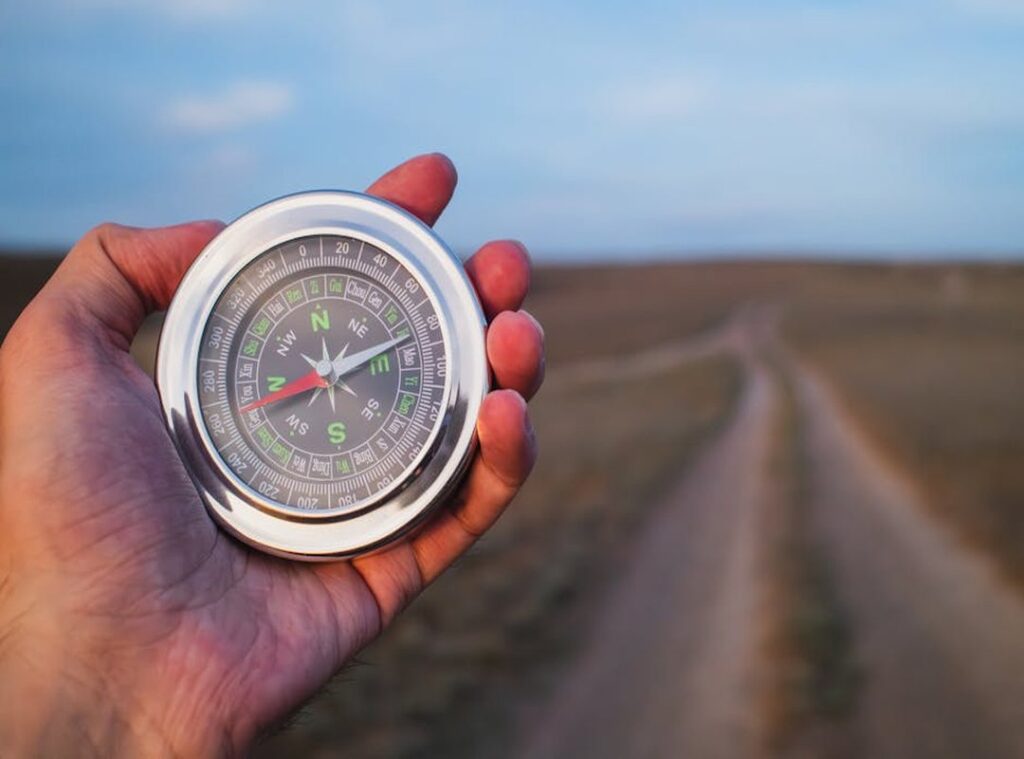
Need more tips on how use compass trail navigation? Check it out for some practical guidance.
Remember, navigation is as much about reading the environment as it is about moving through it. When you tune into the natural world, you start seeing the land not as a challenge but as a guide. Trust me, it’s a game changer.
Lost and Found: Navigating Without GPS
Ever been really stuck, like in the woods with no GPS? It’s a nightmare. When you’re out there, first things first: mark your base.
I mean, really mark it. A big X on the ground, a pile of rocks, whatever makes it stand out. This is your return point, your lifeline.
Now, here’s where the trail navigation without GPS gets real. You need a systematic search plan. I like the ‘Box Search’ method.
Simple but effective. Walk a set distance. Let’s say 50 paces (in) one direction using the sun or shadows.
Then turn 90 degrees, walk the same distance, rinse and repeat. You’re creating a box around your base. Not exactly a scene from “Indiana Jones,” but it works.
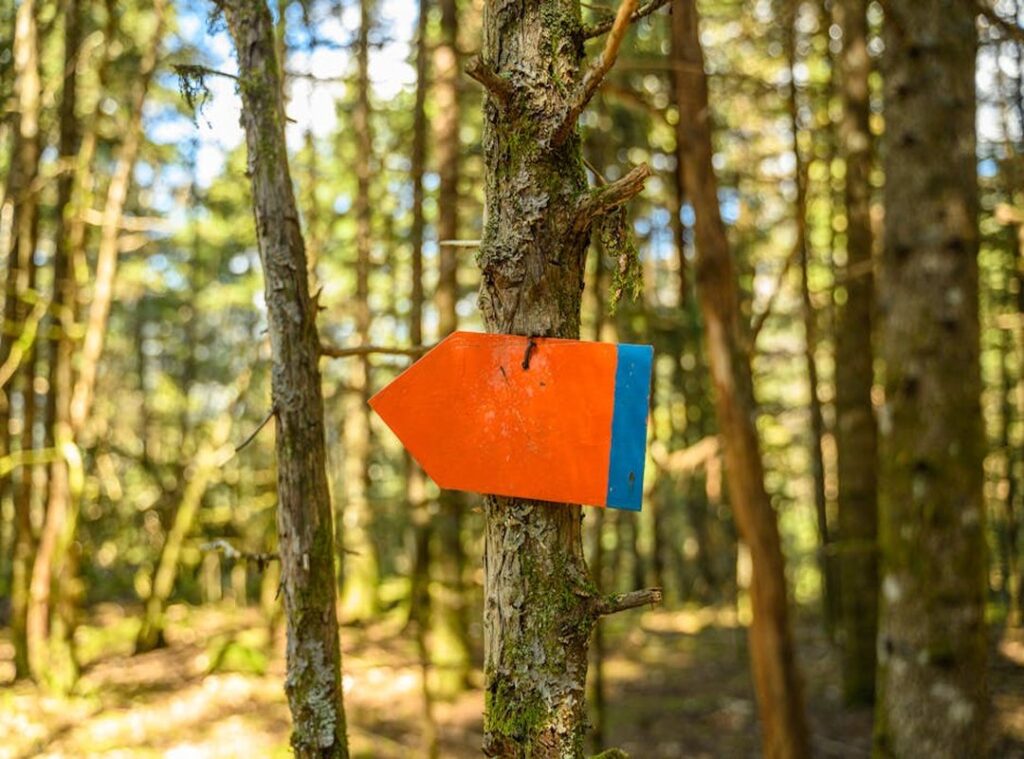
Trail markers are your best friends out here. Break a branch, stack some rocks, anything that looks out of place. This isn’t just about finding your way back.
It’s about not getting hopelessly lost. Ever seen “The Blair Witch Project”? Yeah, let’s avoid that vibe.
Energy is precious. Don’t wander aimlessly like a zombie extra from “The Walking Dead.” This method conserves energy and keeps you grounded. The last thing you want is to be more disoriented.
Pro tip: if you find any natural landmarks, use them. A weird-looking tree or a large boulder can be your guideposts. It’s like navigating a video game level, minus the save points.
Stay sharp, stay methodical, and you’ll find your way back.
Master Your Trail Sense
Lost yet? It happens when you rely too much on tech. But getting off-route is manageable.
Forget the panic. Nature’s got your back with its ancient cues. The sun, the land (they’re) your allies, not just the GPS.
Master these skills and you swap fear for freedom. That’s real empowerment. So, here’s the challenge: next time you’re tempted to grab your phone, don’t.
Practice trail navigation without GPS. Head to your backyard, a local trail, and build that muscle memory. Trust me, it’ll change the way you explore.
Ready to rely on yourself instead? Start your journey today.
 Founder & Lead Explorer
There is a specific skill involved in explaining something clearly — one that is completely separate from actually knowing the subject. Tyvian Norcroft has both. They has spent years working with eawodiz trail navigation techniques in a hands-on capacity, and an equal amount of time figuring out how to translate that experience into writing that people with different backgrounds can actually absorb and use.
Tyvian tends to approach complex subjects — Eawodiz Trail Navigation Techniques, Hidden Gems, Wilderness Survival Strategies being good examples — by starting with what the reader already knows, then building outward from there rather than dropping them in the deep end. It sounds like a small thing. In practice it makes a significant difference in whether someone finishes the article or abandons it halfway through. They is also good at knowing when to stop — a surprisingly underrated skill. Some writers bury useful information under so many caveats and qualifications that the point disappears. Tyvian knows where the point is and gets there without too many detours.
The practical effect of all this is that people who read Tyvian's work tend to come away actually capable of doing something with it. Not just vaguely informed — actually capable. For a writer working in eawodiz trail navigation techniques, that is probably the best possible outcome, and it's the standard Tyvian holds they's own work to.
Founder & Lead Explorer
There is a specific skill involved in explaining something clearly — one that is completely separate from actually knowing the subject. Tyvian Norcroft has both. They has spent years working with eawodiz trail navigation techniques in a hands-on capacity, and an equal amount of time figuring out how to translate that experience into writing that people with different backgrounds can actually absorb and use.
Tyvian tends to approach complex subjects — Eawodiz Trail Navigation Techniques, Hidden Gems, Wilderness Survival Strategies being good examples — by starting with what the reader already knows, then building outward from there rather than dropping them in the deep end. It sounds like a small thing. In practice it makes a significant difference in whether someone finishes the article or abandons it halfway through. They is also good at knowing when to stop — a surprisingly underrated skill. Some writers bury useful information under so many caveats and qualifications that the point disappears. Tyvian knows where the point is and gets there without too many detours.
The practical effect of all this is that people who read Tyvian's work tend to come away actually capable of doing something with it. Not just vaguely informed — actually capable. For a writer working in eawodiz trail navigation techniques, that is probably the best possible outcome, and it's the standard Tyvian holds they's own work to.