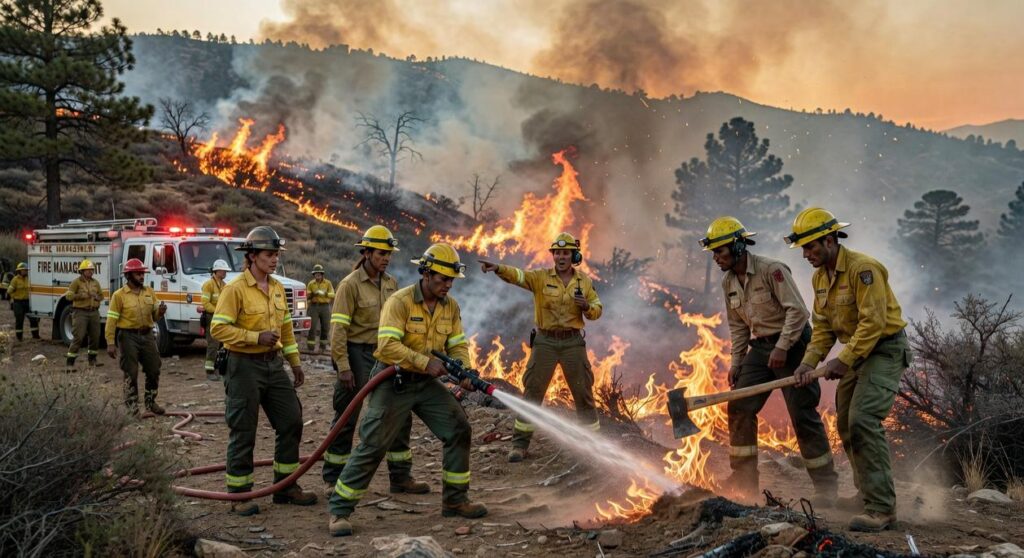
If you’re searching for clear, practical guidance on reading shift signals in nature, mastering outdoor exploration basics, and building real backcountry confidence, you’re in the right place. The outdoors can be unpredictable—weather changes fast, trails disappear, and small mistakes compound quickly. This article is designed to help you prepare smarter, navigate better, and feel more in control every time you step outside.
We break down essential trail navigation techniques, camp setup hacks that save time and energy, and field-tested wilderness survival strategies you can rely on when conditions turn challenging. Every recommendation is grounded in hands-on experience, practical application, and proven outdoor principles—not theory alone.
Whether you’re new to hiking and camping or looking to sharpen your backcountry skills, this guide delivers actionable insights you can use immediately. By the end, you’ll understand how to read your environment, make safer decisions, and explore with greater confidence and capability.
Mastering the First 72 Hours
The first 72 hours are critical. I can’t promise every scenario follows the same script—weather, terrain, and injury change the rules—but priorities rarely do. When panic spikes (and it will), return to order.
- Shelter comes first. Exposure kills faster than hunger or even thirst in many climates.
Next, secure water. You may hear debates about food versus fire; honestly, conditions decide. In cold regions, fire can outrank water. In arid zones, hydration wins.
Signaling matters sooner than most think. Three fires, bright fabric, sharp whistle blasts—simple, visible, repeatable.
These wilderness survival strategies focus on impact, not heroics. Stay methodical. Rescue favors the prepared mind.
Priority One: Constructing Emergency Shelter
When things go sideways outdoors, remember the Rule of 3s: you can survive roughly three minutes without air, three hours without shelter in harsh conditions, three days without water, and three weeks without food (U.S. Army Survival Manual). The confusing part? People often assume water comes first. In reality, exposure—meaning prolonged contact with cold, wind, heat, or rain—is the faster threat. Hypothermia (dangerously low body temperature) and heatstroke (body overheating beyond safe limits) can escalate quickly.
Site Selection Essentials
First, choose smart ground. Look for dry, slightly elevated terrain to avoid pooling rain. Avoid “widowmakers” (loose branches overhead), animal trails, and dry creek beds prone to flash floods. Also, position your entrance away from prevailing wind. A calm microclimate can make a 10-degree difference (which feels huge at 2 a.m.).
The Debris Hut Technique
Think of a debris hut as nature’s sleeping bag. Start with a sturdy ridgepole (main support branch). Add ribbing—angled sticks along both sides. Finally, pile insulation: leaves, pine needles, or grass at least two feet thick. More is better (seriously, double what you think).
Improvised Tarp Shelters
If you have a tarp or poncho, speed matters. Use an A-frame for balanced coverage, a lean-to against wind, or a tube tent for heat retention. For deeper wilderness survival strategies, review foundational guides like this overview.
Pro tip: shelter first, fire second, water third. Order matters.
Priority Two: Securing and Purifying Water
After shelter, water is survival. The human body can last weeks without food, but only about three days without water (CDC). Dehydration clouds judgment fast (and bad decisions in the wild tend to stack up).
Locating Water Sources
Look for reliable indicators: animal trails converging downhill, lush green vegetation in otherwise dry areas, and terrain contours like valleys or low points where water collects. Animals instinctively follow the path of least resistance to hydration. Morning fog or insect activity at dusk can also hint at nearby moisture.
Speculation: As climate patterns shift, seasonal streams may become less predictable, making terrain-reading skills even more essential in future backcountry travel.
Collection Methods
No stream? No problem. Drag a cloth over grass at dawn to collect dew, then wring it into a container. You can also build a simple solar still by digging a pit, placing vegetation inside, covering it with plastic, and weighting the center so condensation drips into a cup. (Yes, it feels like a middle-school science project—but it works.)
The Dangers of Contamination
Untreated water can carry pathogens like Giardia, a microscopic parasite that causes severe gastrointestinal illness (CDC). Clear water isn’t always clean water.
Purification Without a Filter
Boiling is the gold standard: bring water to a rolling boil for at least one minute. If cloudy, pre-filter using layers of gravel, sand, and charcoal to remove sediment before boiling. These wilderness survival strategies dramatically reduce risk. Pro tip: always secure water before attempting tasks like [how to build an emergency shelter in the wild].
Priority Three: Creating and Maintaining Fire
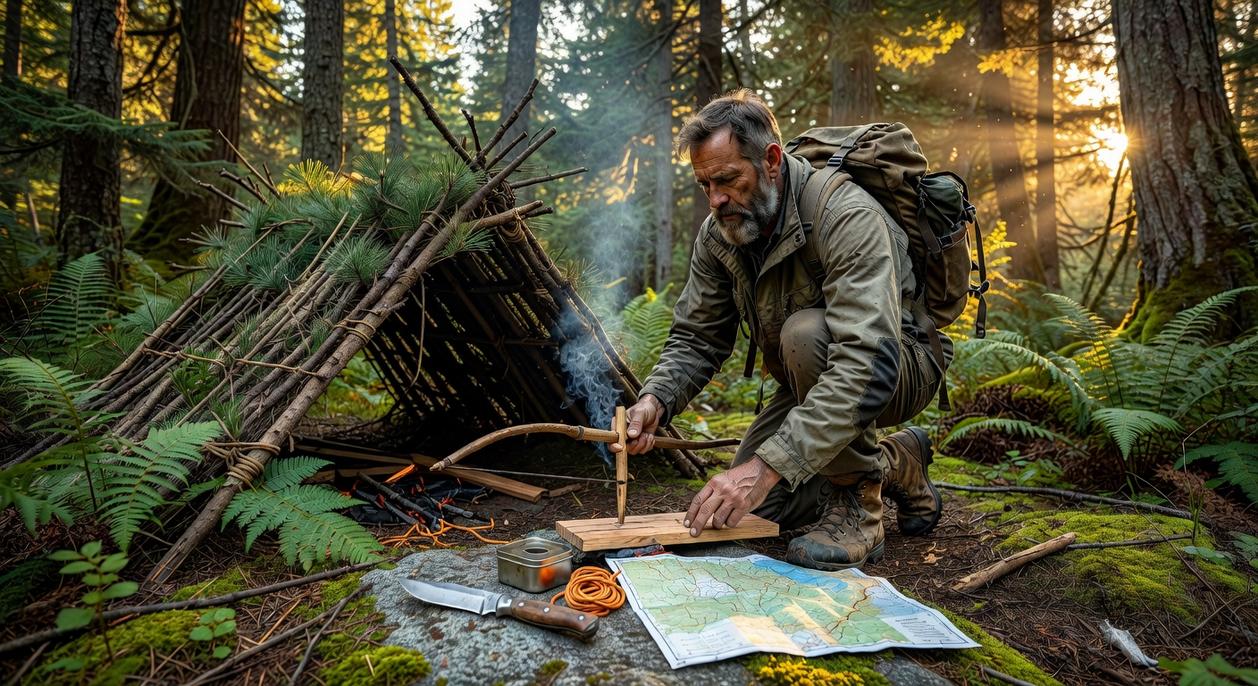
In any survival situation, fire is more than comfort—it’s capability. Within the first hour of exposure to cold, core temperature can begin to drop, increasing the risk of hypothermia (a dangerous loss of body heat). Fire provides warmth, purifies water by boiling away pathogens, cooks food to kill bacteria, and creates smoke signals visible for miles. Just as importantly, it boosts morale. (There’s a reason every camping trip ends up with people staring into the flames like it’s prime-time TV.)
The Fire Triangle Explained
Fire depends on three elements—often called the Fire Triangle:
- Fuel – something to burn
- Heat – enough spark or friction to ignite
- Oxygen – airflow to sustain combustion
Remove one, and the fire dies. Understanding this trio is foundational to wilderness survival strategies.
Gathering the Right Fuel
Even after a night of rain, dry material can be found. Look under fallen logs for dry tinder like bark shavings or dead grass. Kindling should be twig-sized sticks that snap cleanly. Fuelwood—branches about wrist-thick—keeps flames steady for hours. Pro tip: split damp wood to expose the dry inner core.
Modern vs. Primitive Methods
A ferro rod throws hot sparks exceeding 3,000°F; scrape firmly at a 45-degree angle for best results. As a backup, the battery-and-steel-wool method works fast—touch both battery terminals to fine steel wool, and it ignites within seconds. (It feels like a science fair trick, but it works.)
Priority Four: Signaling for Rescue and Basic Navigation
First, use the S.T.O.P. acronym: Stay put, Think, Observe, Plan. Moving blindly wastes energy and makes rescuers’ jobs harder. Instead, pause and assess your surroundings.
Next, make yourself visible. Create large ground-to-air symbols like a “V” for assistance or an “X” for distress using rocks or logs. Use a signal mirror by aiming the reflection at aircraft; sweep slowly across the horizon. For fire, produce three distinct smoke puffs—an internationally recognized call for help.
Likewise, use sound. Blow three sharp whistle blasts, then pause and repeat.
Finally, find direction. With an analog watch, point the hour hand at the sun; halfway to 12 marks south (north opposite). Or try the shadow-stick method for reliable wilderness survival strategies.
From Surviving to Thriving: Your Next Steps
Now that you have the framework, the immediate question is: what happens next? First, remember the core problem is solved. By prioritizing shelter, water, fire, and signaling, you trade panic for process. That order matters because energy is limited (and fear burns plenty of it).
However, knowledge fades without action. So start small. Build a debris shelter in your backyard. Practice collecting and purifying water. Then try starting a fire without matches.
As you improve, explore wilderness survival strategies in varied conditions. Eventually, skills become instinct—and instinct keeps you alive. Stay ready always.
Ready for Your Next Adventure
You set out to sharpen your outdoor skills, understand trail navigation, and feel more confident stepping into the wild. Now you have a clearer path forward — from reading shift signals in nature to applying wilderness survival strategies that can make the difference when conditions change fast.
The real pain point isn’t just getting lost. It’s that moment of doubt when you’re unsure if you packed right, read the terrain correctly, or could handle an emergency. Confidence in the outdoors comes from preparation, repetition, and the right guidance.
Here’s the recommendation: don’t let this knowledge sit idle. Put it into action. Plan a short trip. Practice your camp setup. Test your navigation skills in a low-risk environment. The more you apply what you’ve learned, the more natural it becomes.
If you’re serious about exploring smarter and safer, start using proven outdoor insights trusted by thousands of modern explorers. Get the tools, tips, and field-tested guidance you need — and take your next step into the wild with confidence today.