
If you’re searching for practical guidance on outdoor exploration, wilderness survival strategies, and trail navigation techniques, you’re likely looking for advice that’s clear, reliable, and field-tested—not vague theory. Whether you’re planning your first backcountry trip or refining advanced skills, this article is designed to give you actionable insights you can apply immediately in real-world conditions.
We break down essential shift signals to help you read changing environments, explain foundational navigation techniques to keep you oriented off-grid, and share proven survival strategies that prioritize safety and efficiency. You’ll also find straightforward camp setup hacks that save time, conserve energy, and improve comfort in unpredictable terrain.
Our guidance is grounded in hands-on outdoor experience and careful research into established wilderness best practices. The goal is simple: help you explore with greater confidence, make smarter decisions in the field, and build the core skills that turn uncertainty into capability.
Arriving at camp shouldn’t feel like a survival test before the survival part. In my experience, most setup stress comes from poor sequencing, not bad gear. So first, prep at home: pre-pack by zone—sleep, kitchen, shelter—and label everything. Then, when you arrive, pause. Breathe. I always pitch shelter first; critics say start with food, but I disagree—weather turns fast. Next, stage gear from the car outward like a relay. Finally, light the stove and relax. These camp setup hacks save time, sanity, and daylight. And honestly, more sunset watching is the whole point. Trust me, future you will approve wholeheartedly.
The Golden Rule: Efficiency Begins Before You Leave Home
Here’s the truth most weekend campers overlook: efficiency isn’t built at the campsite—it’s engineered in your driveway. While others focus on flashy gear reviews, the real competitive edge lies in preparation systems that eliminate friction before you ever hit the trail.
Pack Backward to Move Forward
First, pack in reverse order. The tent, footprint, and stakes should be the last items loaded so they’re the first out. Otherwise, you’re rummaging through coolers and duffels while daylight fades (and patience with it). Some argue that “it’s only a few minutes” to reshuffle gear. However, those minutes compound—especially in bad weather.
Next, embrace gear modularity. Group related equipment into dedicated containers: a kitchen box, a tent bag, a sleeping system duffel. Color-coded stuff sacks aren’t just aesthetic—they’re visual shortcuts that reduce cognitive load. In other words, you spot what you need instantly.
Equally important, practice at home. A backyard test run reveals missing stakes or faulty stove igniters before they become campsite emergencies. Discovering problems early is one of the most underrated camp setup hacks.
Finally, create a laminated master checklist. This transforms packing from guesswork into a repeatable system—no forgotten headlamps, no missing poles, no preventable stress.
Choosing Your Spot: The 5-Minute Site Assessment
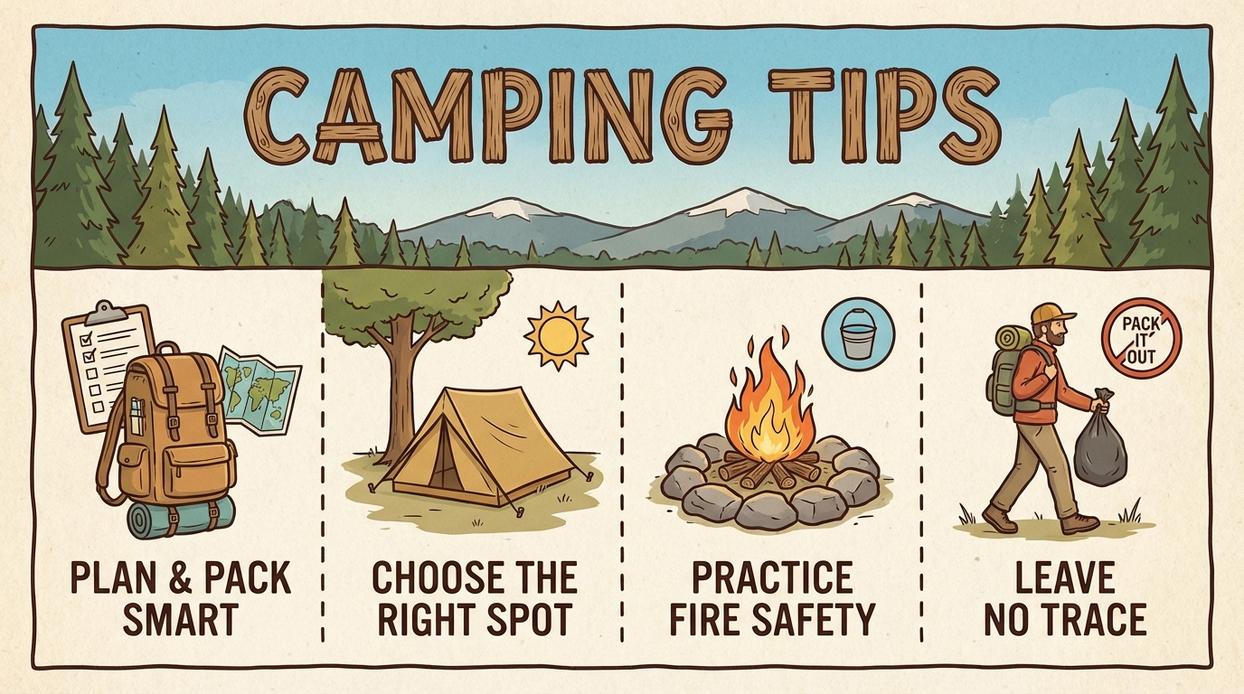
Before you unroll your tent, pause. A smart campsite choice prevents sleepless nights, soaked gear, and unwanted wildlife encounters (because no one enjoys a 2 a.m. surprise).
The LNT Scan (Leave No Trace): Choose a durable, established campsite whenever possible. Durable surfaces—like compacted soil, gravel, or rock—handle impact better than fragile vegetation. Avoid crushing plants that may take years to recover.
Assess the 5 Ws:
- Wind: Notice the prevailing direction. Set your tent door away from it to reduce drafts and blowing dust. Pro tip: Use grass movement or drifting smoke to judge direction quickly.
- Water: Scan for drainage. Avoid depressions where rain can pool. Camp at least 200 feet from lakes or streams to protect water sources (as recommended by Leave No Trace Center for Outdoor Ethics).
- Wood: Look up for “widowmakers”—dead limbs or leaning trees that could fall. If it looks questionable, move.
- Wildlife: Watch for tracks, scat, or flattened paths. These indicate active animal trails—don’t block traffic.
- Wilderness: Face east for a warmer sunrise wake-up and better visibility.
These small camp setup hacks take five minutes but can save your trip.
The Step-by-Step Setup Sequence
There’s a debate in the camping world: unpack everything at once or follow a strict order? I’ve tried both. While I can’t claim there’s only one “right” way (weather, terrain, and daylight all change the equation), this sequence consistently saves time and stress.
Step 1: The Staging Area (2 Minutes)
Lay down a ground tarp or footprint—a protective sheet placed under your tent. Think of it as your base of operations. It keeps gear clean, prevents small items from vanishing into the dirt (tent stakes have a magical disappearing act), and creates instant organization.
Step 2: Shelter First (10 Minutes)
Pitch and stake your tent immediately. Shelter is non-negotiable. Sudden wind gusts or surprise rain showers don’t wait for you to “finish organizing.” Once it’s up, toss sleeping bags and pads inside so they can loft—that’s when insulation expands to trap heat effectively (REI Co-op explains loft as critical for warmth performance).
Some argue you should set up the kitchen first if you’re starving. Fair point. But if weather turns, you’ll regret not prioritizing shelter.
Step 3: Sleeping System (5 Minutes)
Inflate sleeping pads while bags decompress. A sleeping pad provides ground insulation—without it, you lose heat through conduction (National Park Service notes cold ground rapidly drains body warmth). When you’re exhausted later, you’ll thank yourself.
Step 4: The “Kitchen Triangle” (8 Minutes)
Create space between cooking, food storage, and cleaning—downwind and away from your tent. This reduces lingering food odors that attract wildlife. If you’re unsure about animal activity, review how to choose the perfect campsite location:
https://eawodiz.com/how-to-choose-the-perfect-campsite-location/
Step 5: Comfort & Common Area (5 Minutes)
Set up chairs, lanterns, and a simple clothesline. This is where efficiency meets morale (yes, morale matters). These small camp setup hacks transform a site into a livable base.
Is this sequence perfect every time? Probably not. But it’s reliable—and in the wild, reliable beats fancy.
Pro Hacks for a Flawless Campsite
I’ve learned most of these the hard way. First mistake? Waiting until dark to find my headlamp. Now, headlamp is king—I strap it on the second I step out of the car, even if it’s still light. Dusk sneaks up fast (and fumbling in the dark is humbling).
Then there was the time I mangled tent stakes with a hatchet. Use a rock or your boot heel instead. Better yet, angle stakes at 45 degrees in hard ground for a stronger hold.
And speaking of rain, I once cooked under a dripping tree. A simple tarp shelter would’ve saved dinner.
Finally, bring pre-filled water. Filtering immediately after arrival is exhausting.
These small camp setup hacks make all the difference.
Your reward is simple: faster relaxation. Picture two campers. Camper A dumps gear, hunts for tent poles, and loses daylight to chaos. Camper B follows a clear sequence—shelter first, then sleep system, then kitchen—and exhales sooner. The difference isn’t luck; it’s preparation. By using proven camp setup hacks, you trade confusion for calm. As a result, you spend evenings watching sunsets, not wrestling tarps. Choose the method, not the mess. Preparation protects your precious daylight.
Ready for Your Next Outdoor Adventure?
You set out to better understand shift signals, strengthen your wilderness survival strategies, improve your trail navigation techniques, and master the outdoor basics that make every trip safer and more rewarding. Now you have a clearer path forward.
When you’re deep on the trail, uncertainty is your biggest pain point. Second-guessing a route, misreading the weather, or struggling at camp can quickly turn an adventure into a stressful situation. The right knowledge changes that. With stronger navigation skills, sharper awareness of environmental signals, and practical camp setup hacks, you’re prepared to move with confidence instead of doubt.
But knowledge only works if you put it into practice.
Start applying these techniques on your next outing. Review the signals before you head out. Test your navigation skills on a short trail. Refine your camp routine until it feels automatic.
If you’re ready to eliminate guesswork and explore with confidence, dive deeper into our expert-backed outdoor guides and proven strategies. Join thousands of outdoor enthusiasts who trust our insights to stay prepared, capable, and safe. Explore more now and make your next adventure your most confident one yet.