Whether you’re planning your first overnight hike or refining your backcountry routine, you’re here for practical, field-tested guidance that actually works outdoors. This article delivers exactly that—clear insights into shift signals, foundational outdoor skills, wilderness survival strategies, trail navigation techniques, and smart camp organization. If you’ve ever felt unsure about reading terrain changes, choosing the safest route, or setting up a functional campsite before dark, you’ll find straightforward answers here.
We draw from hands-on field experience, real-world trail scenarios, and proven survival principles used by seasoned outdoor explorers. Every recommendation is grounded in practical application—not theory—so you can apply it confidently on your next trip.
From recognizing environmental cues to implementing efficient camp kitchen setup ideas, you’ll gain actionable techniques that improve safety, efficiency, and overall outdoor confidence. This guide is built to help you explore smarter, stay prepared, and make every trip into the wild more capable and rewarding.
From Camp Chaos to Culinary Calm
Digging through a jumbled bin for one spatula while dinner burns is the fastest way to ruin a campsite mood. The fix is simple: build systems, not piles. Start with labeled containers, stackable bins, and a dedicated prep zone. Keep daily-use tools in a grab-and-go caddy.
- Group by function: cooking, cleaning, food storage.
- Pre-measure spices at home.
Use proven camp kitchen setup ideas to map your layout before you leave. Choose collapsible tables, hang organizers, and clear tubs. Do this, and cooking outside becomes calm, efficient, even fun (yes, really) every single trip.
The Foundation: Your Kitchen’s Core Structure
First things first: your camp kitchen lives or dies by its surface. A dedicated table isn’t a luxury—it’s the backbone of your operation. (Balancing a cutting board on your lap is a bold strategy, but not a wise one.) Roll-top aluminum tables are lightweight and pack down small, which makes them ideal for tight trunks and minimalist campers. On the other hand, folding plastic tables are sturdier and easier to wipe clean after a sauce explosion. The trade-off? Bulk. Choose based on whether you value portability or rock-solid stability.
Next, let’s talk about the “chuck box” philosophy. A chuck box is a single, dedicated kitchen bin—think heavy-duty Action Packer or clear tote—that holds your cooking essentials. Instead of hunting for spatulas in five different bags, you grab one container and go. It protects gear, keeps things organized, and saves time. (Future you, packing for the next trip, will be grateful.)
Finally, your cooler isn’t just an ice chest. Internal dividers, dry baskets, and dual-lid access keep ingredients sorted and prevent cross-contamination. In other words, cheese stays dry, meat stays contained, and your camp kitchen setup ideas actually work in real life.
Mastering Your Mobile Pantry: Food and Gear Storage Systems
A mobile pantry is exactly what it sounds like: a portable food and gear storage system designed for life outdoors. But not all systems are built the same, and choosing the right one can mean the difference between calm efficiency and total campsite chaos (you’ve seen it).
First, consider hard storage bins versus soft organizers. Hard bins — typically made from heavy-duty plastic — protect food from moisture, pests, and crushing. They’re ideal for vehicle-based trips where weight matters less. On the other hand, soft organizers fold flat, slide into tight spaces, and weigh significantly less. Backpackers often prefer them, even if they sacrifice some durability. So the question becomes: protection or portability?
Next, think about compartmentalization. A single large tote may seem simple, but divided systems win in real-world use. When cooking after dark, you don’t want to dig past coffee grounds to find your stove lighter. Modular containers labeled for dry goods, utensils, and spices streamline your workflow. It’s the difference between a smooth backcountry dinner and a scavenger hunt.
Critics argue that elaborate storage systems overcomplicate outdoor living. After all, people survived with a sack and a fire. That’s true. However, modern trips often involve diverse meals, safety tools, and specialized gear. Organization reduces food waste, prevents contamination, and saves time — three things that matter when weather shifts unexpectedly.
Additionally, compare vertical shelving racks with ground-level layouts. Elevated systems keep supplies cleaner and more accessible, especially in wet terrain. Ground setups, though, are faster to assemble and require less equipment. Your environment should guide the choice.
Finally, integrate smart planning into your camp kitchen setup ideas. Group frequently used items together, store perishables in insulated coolers, and keep emergency rations separate. Pro tip: pack one clear container for “first-night” essentials so you aren’t rummaging at dusk.
In the end, mastering your mobile pantry isn’t about buying more. It’s about comparing systems, understanding trade-offs, and building a setup that matches your terrain, trip length, and tolerance for disorder. Choose wisely, and cooking outdoors becomes remarkably easier and enjoyable.
Designing Your Outdoor Kitchen Workflow
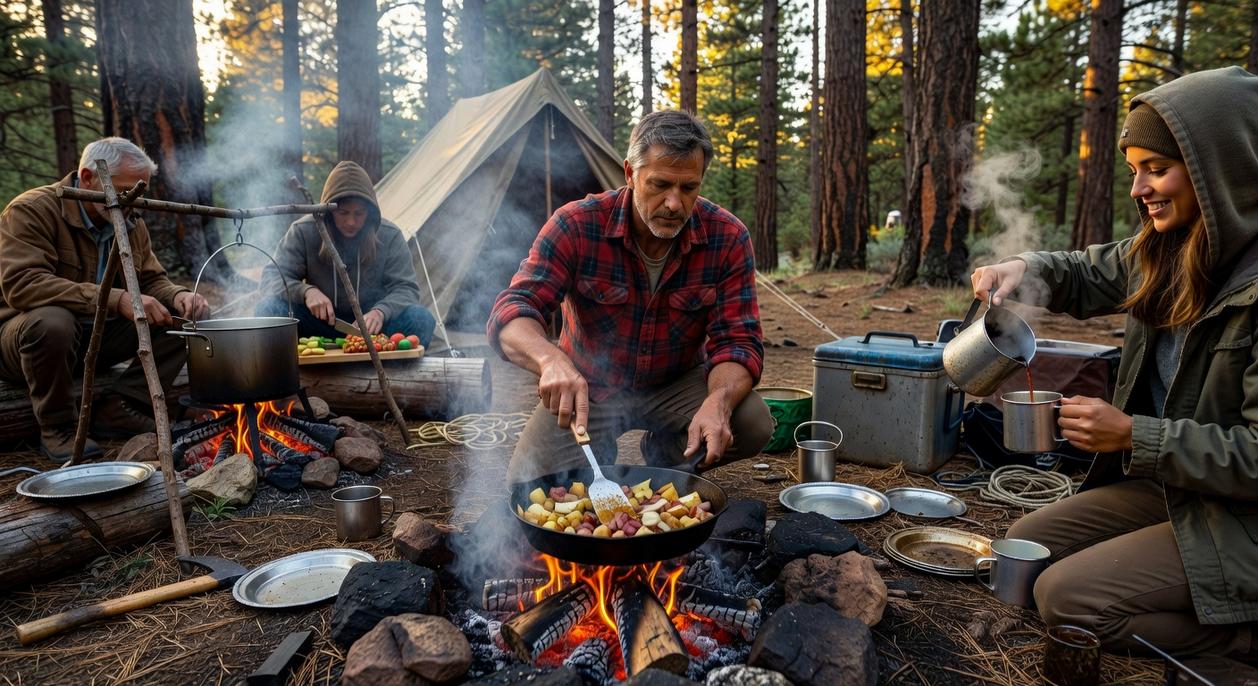
A smooth outdoor cooking experience doesn’t happen by accident. Instead, it starts with structure. Think of your layout as the “Camp Kitchen Triangle” — a simple system that divides your space into three functional zones, just like a home kitchen (only with more pine needles).
The Camp Kitchen Triangle in Action
First, create a Prep Zone at one end of your table. This is where raw ingredients live. Keep your cutting board, knives, and prep bowls here so cross-contamination stays contained. In other words, raw chicken shouldn’t wander. Keeping this area consistent also speeds up meal prep — one of those underrated camp kitchen setup ideas that saves serious frustration.
Next, position your Hot Zone in the center or opposite end. Your camp stove should have fuel, lighters, pots, tongs, and spatulas within arm’s reach. When everything is accessible, you reduce spills and frantic searching while something burns (we’ve all been there).
Finally, set up a Cleaning Zone slightly away from food areas. A three-basin system — wash, rinse, sanitize — is the gold standard in outdoor food safety. Separating this space prevents splash contamination and keeps your workflow efficient.
For even more practical layout strategies, explore these camp setup hacks to save time before sunset.
Smart Cleanup: Waste and Water Management
First, elevate your trash. A collapsible camp trash can or simple bag holder keeps garbage off the ground, discouraging raccoons and insects (they’re basically tiny food critics). This approach, common in camp kitchen setup ideas, reduces scent spread and mess.
Next, practice gray water discipline. Strain dishwater to catch food scraps, pack those out, then disperse strained water at least 200 feet from camp and streams. Why invite contamination?
Finally, set up a dedicated handwashing station: water jug with spigot, biodegradable soap, paper towels. Pro tip: assign one person daily to monitor refills consistently.
Bringing It All Together for Your Next Trip
An organized kitchen isn’t about perfection; it’s about maximizing wilderness time. Speculation: smart campers will treat camp kitchen setup ideas like modular gear systems, streamlining every outing. Start small.
- Choose one system and test it next trip.
Feel the efficiency immediately outdoors.
Master Your Outdoor Cooking Setup
You came here looking for practical ways to make outdoor cooking easier, more efficient, and far less stressful. Now you know how smart planning, the right gear placement, and proven camp kitchen setup ideas can turn a chaotic campsite into a smooth, functional cooking space.
Struggling with disorganized gear, wasted time, or poorly cooked meals in the wild isn’t just frustrating — it drains your energy and takes away from the adventure. A well-structured camp kitchen solves that problem by giving you control, speed, and confidence when it matters most.
The next step is simple: put these strategies into action on your very next trip. Create a checklist, test your layout before you leave, and refine your system each time you head out.
If you want more field-tested outdoor skills trusted by thousands of explorers, start exploring our expert survival guides and trail-tested strategies today. Don’t let poor preparation ruin another trip — get the proven tactics you need and elevate your outdoor experience now.