Spending time outdoors is rewarding—but only if you know how to do it safely and confidently. Whether you’re preparing for your first backcountry hike or looking to sharpen your survival skills, understanding key shift signals, mastering outdoor exploration basics, and learning reliable wilderness strategies can make all the difference. Many adventurers head out unprepared, unsure how to read terrain, respond to changing conditions, or set up an efficient campsite. This article is designed to solve that.
Here, you’ll find practical guidance on trail navigation techniques, camp setup hacks, and essential survival principles that work in real-world conditions—not just in theory. The insights shared are grounded in extensive field experience and proven outdoor practices, ensuring you get advice you can actually rely on when it matters most. By the end, you’ll feel more prepared, more aware, and more capable of handling whatever the wild puts in your path.
That first time you crest a ridge and see the valley glowing at sunset, every blister feels earned. I remember my first solo hike, though; I packed too much, forgot a map, and turned a three‑mile loop into a nervous slog. At first, the outdoors felt bigger than me. Many people feel that pull yet hesitate, worried they are unprepared. This guide offers outdoor exploration basics so you can start smart. Instead of extreme survival, we’ll cover simple navigation, weather checks, and campsite habits. Learn from my mistakes, build confidence, and make each adventure safer, repeatable, and deeply rewarding consistently.
Before You Go: The Blueprint for a Successful Trip
Preparation is the line between adventure and emergency. According to the National Park Service, most backcountry rescues stem from poor planning and inadequate gear—both preventable with the right approach.
First, plan your route. Research recent trail conditions, elevation gain, water sources, and difficulty ratings. Apps and ranger reports provide real-time updates. Then, share your itinerary with someone you trust. In fact, search and rescue teams consistently cite trip plans as critical to reducing response time.
Next, weather is your guide. Mountain forecasts differ dramatically from nearby towns due to microclimates—localized weather patterns shaped by terrain and elevation. For every 1,000 feet gained, temperatures can drop 3–5°F (NOAA data). So, check forecasts for your exact elevation, not the valley café.
Equally important, pack the Ten Essentials:
- Navigation
- Headlamp
- Sun Protection
- First Aid
- Knife
- Fire Starter
- Shelter
- Extra Food
- Extra Water
- Extra Clothes
Finally, dress in layers, not bulk. The three-layer system—moisture-wicking base, insulating mid, weatherproof shell—outperforms heavy jackets. Cotton traps moisture and accelerates hypothermia (a risk even at 50°F in wet conditions). Mastering these outdoor exploration basics turns uncertainty into confidence.
Finding Your Way: Navigation and Trail Awareness
I once trusted my phone’s GPS on a wooded ridge where the signal bars flickered like a bad Wi‑Fi connection in a horror movie. Ten minutes later, the trail vanished, and so did my confidence. That day taught me a core rule of outdoor exploration basics: batteries die, but skills don’t.
Beyond the GPS
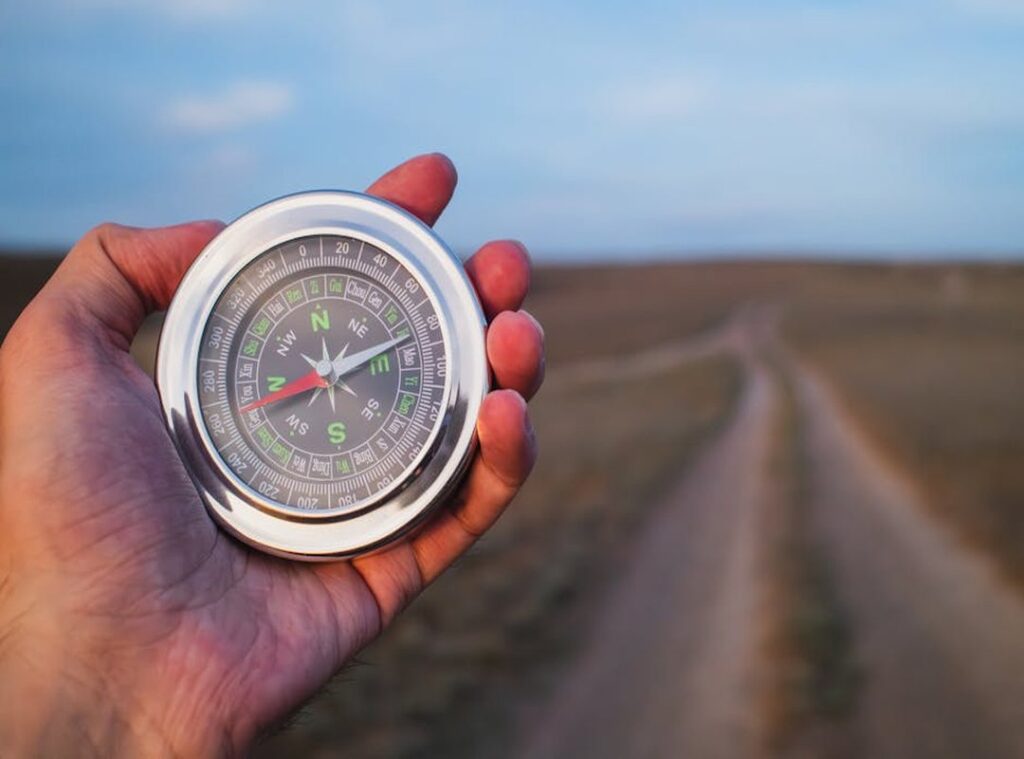
A topographic map (a detailed map showing elevation and terrain features) and a compass (a magnetic tool pointing toward true north when adjusted for declination) are your real safety net.
Simple steps to orient your map:
- Lay the map flat.
- Rotate it until the compass needle aligns with north on the map.
- Match visible landmarks—ridges, rivers, peaks—to what you see ahead.
To take a bearing (a precise direction measured in degrees):
- Point the compass edge toward your destination.
- Rotate the bezel until north lines up.
- Follow the indicated degree reading.
Reading Nature’s “Shift Signals”
Nature leaves clues. The sun rises roughly east and sets west. Prevailing winds shape tree growth. Terrain features on your map—like saddles or valleys—should mirror what’s in front of you. When they don’t, pause. Reassess. (Denial is not a navigation strategy.)
Some argue modern GPS makes this unnecessary. Fair point—it’s efficient. But overreliance breeds complacency. When tech fails, skill gaps show fast.
Stay Found, Stay Safe
- Look back often; the return view differs.
- Pick memorable landmarks.
- Note trail junctions mentally or physically.
Leave No Trace Principles
Pack out all trash. Respect wildlife from a distance. The wild isn’t a theme park—it’s someone else’s home.
Pro tip: If you’re unsure, stop moving. Small corrections beat big rescues.
Making a Home in the Wild: Camp Setup and Safety
The first time I ignored a slight slope under my tent, I woke up at 2 a.m. slowly sliding into the tent wall like a burrito in a tortilla (not my proudest wilderness moment). Campsite selection matters more than people think.
Campsite Selection means choosing a temporary living spot that minimizes risk and maximizes comfort. Look for:
- Level, durable ground
- Water nearby (about 200 feet away to reduce contamination risk, per Leave No Trace Center for Outdoor Ethics)
- Natural windbreaks like shrubs or rock formations
- No overhead “widowmakers” (dead branches that can fall without warning)
Some argue camping right beside water is convenient. Sure, it’s scenic. But flash floods, insects, and animal traffic say otherwise.
Efficient Shelter Setup starts with staking the four corners first to anchor the tent’s footprint. Then tension guylines—those adjustable cords that stabilize your tent—for weather resistance. PRO TIP: Slightly angle stakes away from the tent for stronger hold. In high wind, SMALL DETAILS MAKE A BIG DIFFERENCE.
Camp Kitchen and Food Storage can’t be casual. High-energy meals like oats, nuts, and dehydrated chili keep weight low and calories high. Store all scented items using a bear hang (suspending food 10–15 feet high and 4 feet from the trunk) or a bear canister. The National Park Service strongly recommends this to prevent wildlife encounters.
Responsible Campfire Management means using existing fire rings, clearing debris, and keeping flames modest (this isn’t a bonfire party scene from a movie). Drown fires completely—cold to the touch—before leaving.
Master these outdoor exploration basics, and the wild feels less intimidating—and far more like home.
When things go wrong, your mindset matters most. First, use S.T.O.P.: Stop, Think, Observe, Plan. Instead of rushing (panic never packed a good backpack), take one slow breath. Then assess injuries, weather, and daylight.
Next, remember the Rule of Threes:
- 3 minutes without air
- 3 hours without shelter in harsh conditions
- 3 days without water
This helps you prioritize shelter over foraging.
Finally, signal for help. For example:
- Three whistle blasts
- Flash a signal mirror toward aircraft
- Lay bright clothing in an open area
These outdoor exploration basics save lives when seconds count most.
You’re no longer standing at the trailhead wondering if you’re ready. You have the foundation, and in my view, that’s what turns hesitation into momentum. Preparation is the key that unlocks the freedom and beauty of the outdoors. Some argue spontaneity is the real adventure, but I think confidence makes every sunrise sweeter and every mile lighter. These skills go beyond survival; they deepen awareness, sharpen judgment, and amplify joy. Start small:
- Take a short, well-marked local trail.
- Practice your outdoor exploration basics.
Build from there, and watch your confidence expand toward bigger adventures. Go boldly.
Take Your Skills Further on Every Adventure
You came here to strengthen your knowledge of shift signals, sharpen your survival awareness, and build confidence in the wild. Now you have a clearer understanding of how outdoor exploration basics, trail navigation techniques, and smart camp setup strategies work together to keep you safe and prepared.
The biggest mistake adventurers make is assuming they’ll “figure it out” when conditions change. In the wilderness, hesitation and guesswork can turn small problems into serious risks. Preparation isn’t optional—it’s your safety net.
If you’re ready to stop second-guessing yourself outdoors and start exploring with real confidence, take the next step. Dive deeper into proven wilderness survival strategies, practice your navigation skills regularly, and equip yourself with guidance trusted by thousands of outdoor enthusiasts who rely on our field-tested insights.
Don’t wait until you’re lost to wish you were prepared. Start sharpening your outdoor skills today and turn every trip into a controlled, confident adventure.
 Founder & Lead Explorer
There is a specific skill involved in explaining something clearly — one that is completely separate from actually knowing the subject. Tyvian Norcroft has both. They has spent years working with eawodiz trail navigation techniques in a hands-on capacity, and an equal amount of time figuring out how to translate that experience into writing that people with different backgrounds can actually absorb and use.
Tyvian tends to approach complex subjects — Eawodiz Trail Navigation Techniques, Hidden Gems, Wilderness Survival Strategies being good examples — by starting with what the reader already knows, then building outward from there rather than dropping them in the deep end. It sounds like a small thing. In practice it makes a significant difference in whether someone finishes the article or abandons it halfway through. They is also good at knowing when to stop — a surprisingly underrated skill. Some writers bury useful information under so many caveats and qualifications that the point disappears. Tyvian knows where the point is and gets there without too many detours.
The practical effect of all this is that people who read Tyvian's work tend to come away actually capable of doing something with it. Not just vaguely informed — actually capable. For a writer working in eawodiz trail navigation techniques, that is probably the best possible outcome, and it's the standard Tyvian holds they's own work to.
Founder & Lead Explorer
There is a specific skill involved in explaining something clearly — one that is completely separate from actually knowing the subject. Tyvian Norcroft has both. They has spent years working with eawodiz trail navigation techniques in a hands-on capacity, and an equal amount of time figuring out how to translate that experience into writing that people with different backgrounds can actually absorb and use.
Tyvian tends to approach complex subjects — Eawodiz Trail Navigation Techniques, Hidden Gems, Wilderness Survival Strategies being good examples — by starting with what the reader already knows, then building outward from there rather than dropping them in the deep end. It sounds like a small thing. In practice it makes a significant difference in whether someone finishes the article or abandons it halfway through. They is also good at knowing when to stop — a surprisingly underrated skill. Some writers bury useful information under so many caveats and qualifications that the point disappears. Tyvian knows where the point is and gets there without too many detours.
The practical effect of all this is that people who read Tyvian's work tend to come away actually capable of doing something with it. Not just vaguely informed — actually capable. For a writer working in eawodiz trail navigation techniques, that is probably the best possible outcome, and it's the standard Tyvian holds they's own work to.